 By admin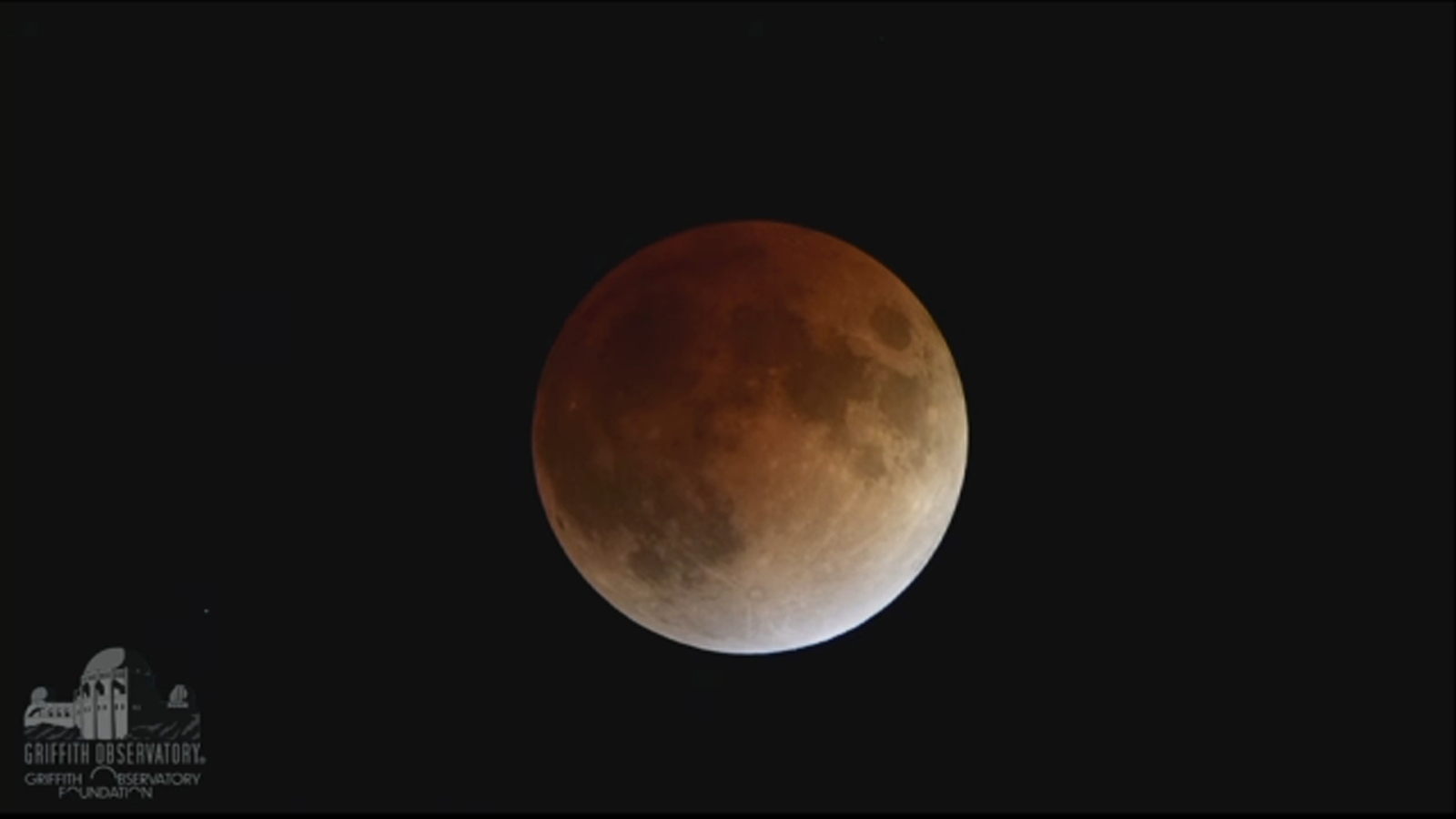
LOS ANGELES (KABC) — A partial lunar eclipse will be visible across Southern California Thursday night, giving skywatchers in Los Angeles a chance to see the moon take on a striking red, copper-colored appearance for the last time until 2029.
Read more Missing 2-year-old child at center of Amber Alert found safe, CHP says
How to watch partial lunar eclipse in Los Angeles
The eclipse begins at 7:34 p.m. as the moon slowly dips behind Earth’s shadow. As the event progresses, the moon is expected to turn a striking red, copper color.
The eclipse will reach its peak at 9:13 p.m. before ending at 10:52 p.m.
The Griffith Observatory will have a live broadcast of the eclipse here from 7:25 p.m. to 12:05 a.m. as long as weather permits. It is expected to be visible from the Griffith Observatory around 8:15 p.m.
You won’t need special glasses to experience this eclipse. Unlike its solar sibling, lunar eclipses are completely safe to experience with the naked eye. If you have binoculars or a telescope, you’ll get an even better view.
The next total lunar eclipse visible in Los Angeles will occur on June 25, 2029.
What is a “blood moon” or lunar eclipse?
Often called a “blood moon” because of its reddish-copper hue, a lunar eclipse occurs when the Earth moves between the Sun and the moon, blocking sunlight from reaching the lunar surface and casting a shadow on our closest celestial neighbor.
Read more Crews battle fire at Dollar Tree in Huntington Park
The celestial event will be visible across North and South America, Africa, Greenland, Iceland and western Europe.
Skywatchers in Los Angeles and across Southern California will have several hours to observe the near-total lunar eclipse as it unfolds through the evening.
On its website, NASA says the rusty coloring “is because our planet blocks most of the Sun’s light from reaching the Moon, and the light that does reach the lunar surface is filtered through a thick slice of Earth’s atmosphere. It’s as if all of the world’s sunrises and sunsets are projected onto the Moon.”
Like all celestial events, cloud cover or bad weather can impact how much you can see.
Read more Amber Alert issued as police search for missing 2-year-old child, man in LA
ABC News contributed to this report.