 By admin
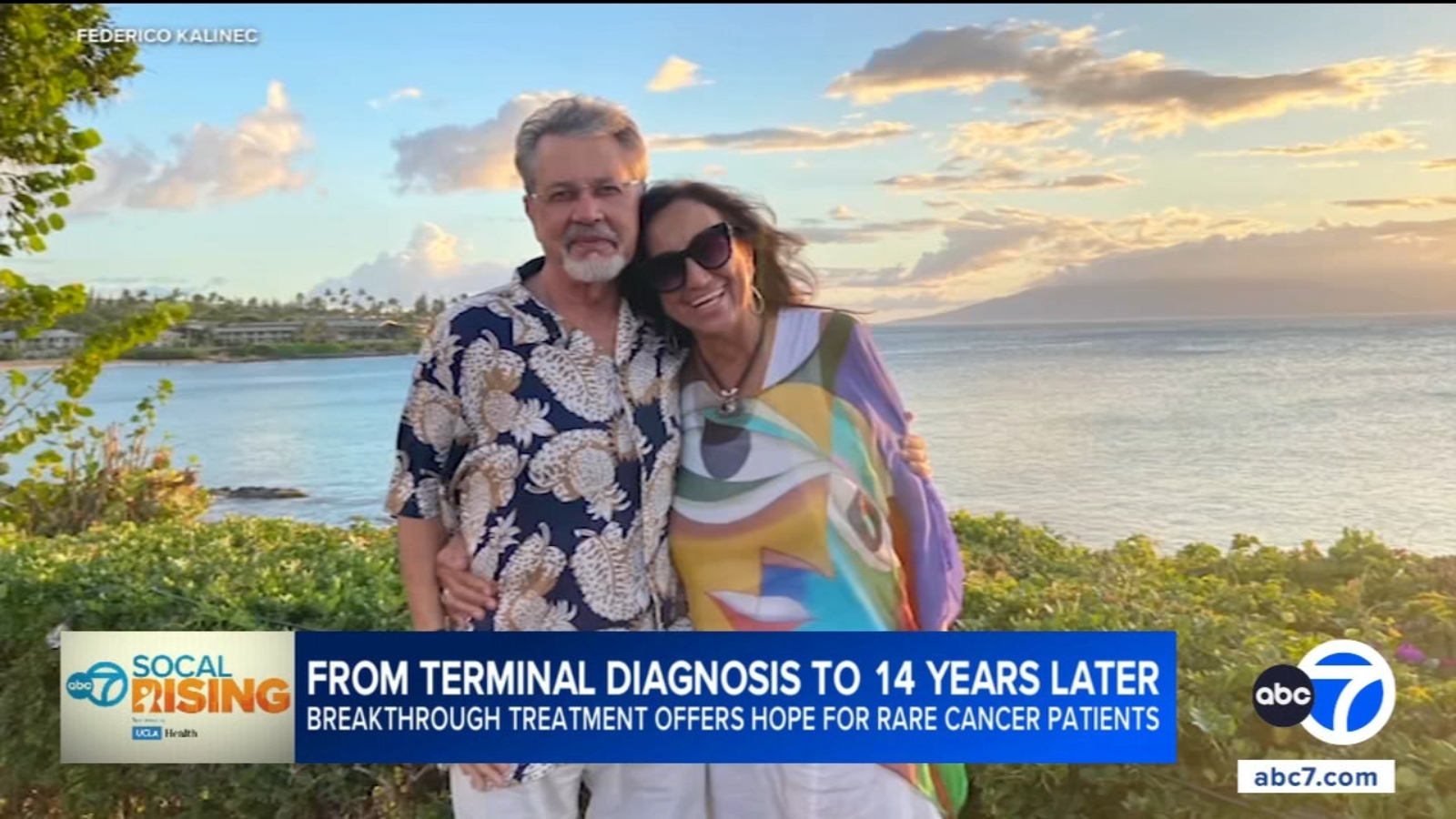
WESTWOOD, LOS ANGELES (KABC) — Retired medical school professor Federico Kalinec was given just months to live after a devastating cancer diagnosis.
Read more Royd Tolkien takes on late brother’s challenges in ALS documentary
Fourteen years later, he’s helping others in the same fight.
“I was given originally two months, three months to live, and it’s already been 14 years,” Kalinec said.
In 2012, Kalinec was diagnosed with a pancreatic neuroendocrine tumor, or PNET. It’s the same rare form of pancreatic cancer that took the life of Apple co-founder Steve Jobs.
For Kalinec, the warning signs were immediate.
“I had jaundice. I was yellow,” he said.
The tumor was pressing on his biliary duct. Even worse, the cancer had spread to multiple organs.
“You have a metastasis in your pancreas, your spleen, your stomach, your liver,” Kalinec said.
At UCLA, surgeons fought back, removing his pancreas and part of his stomach. It kept the disease at bay for years until it returned in 2020. But this time, Kalinec’s timing was impeccable.
“One year before, a new treatment was approved by the FDA,” Kalinec said.
The new treatment is called peptide receptor radionuclide therapy, or PRRT.
Top Stories

2 Riverside County teens arrested in alleged shooting plot targeting Corona High School
- 1 hour ago
Commerce man accused of illegally registering to vote questions show of force during arrest

Bass announces relief for LADWP customers facing high bills: ‘pay whatever they can afford’
Doctors use an advanced PET scan to map out the tumor cells, then deliver a “molecular Trojan horse” infused with radioactive atoms to strike cells from the inside out.
Read more Supervisor Lindsey Horvath endorses Nithya Raman in LA mayor’s race
“It targets those tumor cells and kills them directly. And that’s been shown to be very effective for pancreatic neuroendocrine tumors,” Dr. Timothy Donahue said.
The treatment successfully kept Kalinec’s cancer in check.
Now, he’s paying it forward by partnering with the Hirshberg Foundation for Pancreatic Cancer Research.
On Sunday, Oct. 25, he’ll join the foundation’s annual LA Cancer Challenge 5K at UCLA. This year, the foundation is funding the PNET Pathway Grant Program, a new initiative dedicated to expanding targeted treatments like the one that saved Kalinec.
“The pancreatic neuroendocrine tumors are a very underfunded type of cancer, and it’s so great to see that the Hirshberg Foundation is stepping up,” Dr. Donahue added.
This cutting-edge science is turning a terminal diagnosis into a manageable disease and, hopefully, a future cure.
.
“I have cancer, but I don’t give up and we are fighting,” Kalinec said.
Read more Rally held in Long Beach in support of man detained by ICE