 By admin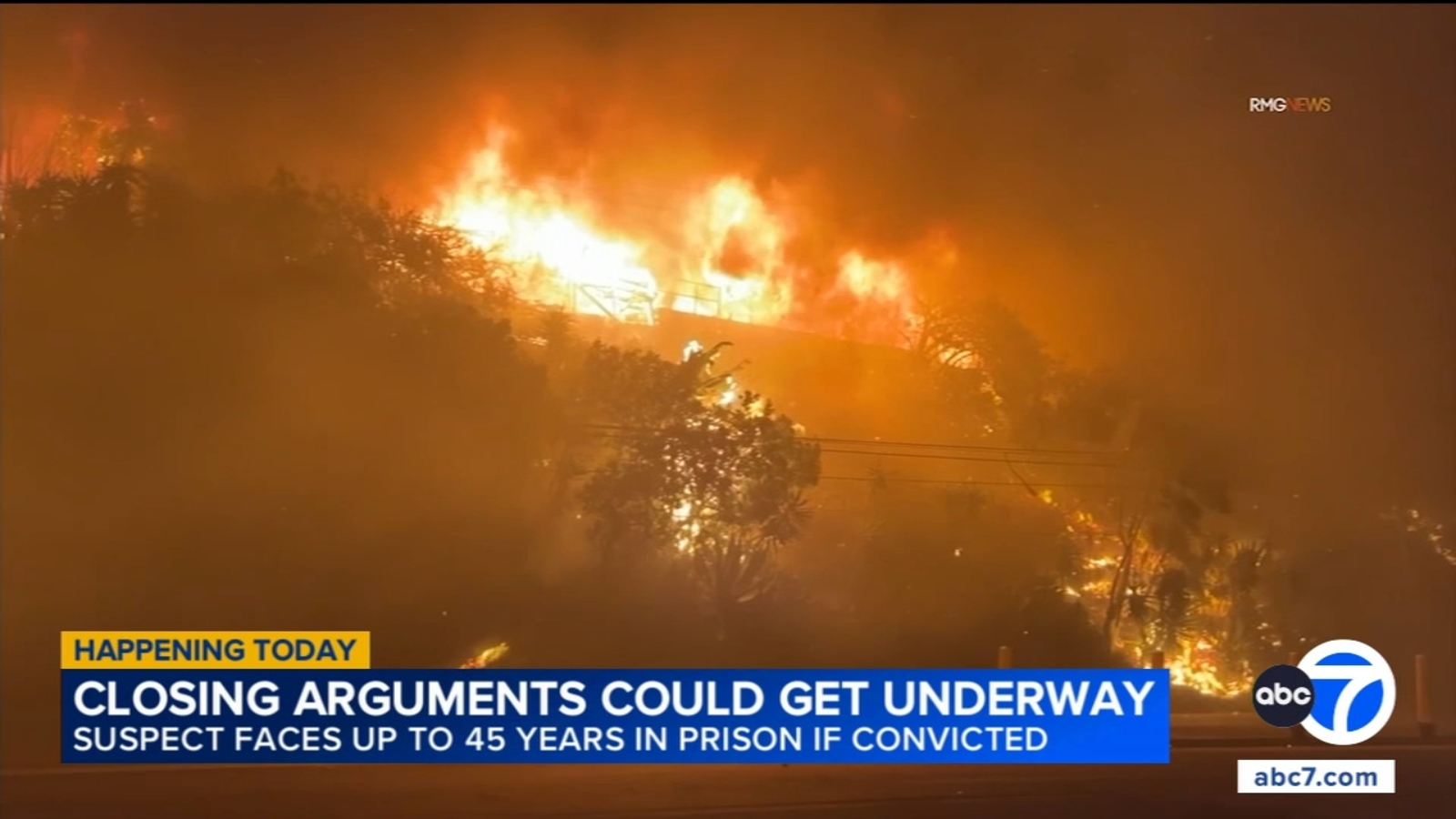
LOS ANGELES (CNS) — Driven by revenge, anger and loneliness, accused Palisades Fire arsonist Jonathan Rinderknecht ignited a small brush fire around midnight on New Year’s Eve 2025 at a remote, deserted area adjacent to the Pacific Palisades’ Summit neighborhood that ultimately exploded into the deadly conflagration that wiped out much of the upscale community, a prosecutor told jurors on Tuesday.
Read more Ask ABC7: Your Boyle Heights warehouse fire questions answered
Firefighters initially thought they had extinguished the New Year’s Eve Lachman Fire, but instead it smoldered underground for six days in the root system of brushes and trees before bursting into view as the deadly Palisades Fire on Jan. 7, 2025, bolstered by strong Santa Ana winds, Assistant U.S. Attorney Danbee Kim said during closing arguments of Rinderknecht’s trial.
Rinderknecht “had a deeply entrenched belief that the wealthy were destroying the world,” she said, telling the panel in Los Angeles federal court that to the defendant’s way of thinking, “the Pacific Palisades neighborhood represented all of that.”
Defense attorney Steven Haney, however, countered that no evidence linked his client to the New Year’s Eve fire and whatever alleged proof was presented to the jury during the 10-day trial “doesn’t make much sense.”
The prosecution, Haney told the panel, “showed you fragments. You don’t convict people on fragments.”
The case was handed to the jury at the end of the day Tuesday. Deliberations are expected to begin Wednesday morning.
A dual French and U.S. citizen, the 30-year-old Rinderknecht faces up to 45 years behind bars if found guilty of three arson counts: destruction of property by means of fire, arson affecting property used in interstate commerce, and timber set afire.
Federal prosecutors rested their case-in-chief last week with a final witness — the owner of the Reel Inn, a popular Malibu seafood restaurant on the Pacific Coast Highway that was leveled in the Palisades Fire on Jan. 7, 2025.
Andy Leonard showed before-and-after photos of what he called his “seafood shack,” which he said he had operated for 38 years. The popular eatery was pictured full of noshing customers in the first shot, followed by a scene of blackened rubble after the blaze. Leonard said he hoped to rebuild and reopen someday.
The most destructive wildfire in Los Angeles history, the Palisades Fire burned 23,448 acres and ruined much of the exclusive Pacific Palisades community, destroying about 6,800 structures and killing 12 people.
With more than two dozen witnesses, the prosecution offered a picture of Rinderknecht in the months leading up to the fire as a troubled, angry man, increasingly bitter about failed relationships, low finances, the current administration, and a dystopian society he believed was divided by cruel corporate overseers who had built a wall between the wealthy and everyone else.
Rinderknecht told investigators he was alone in the area around midnight on Dec. 31, 2024, but denied setting a fire. He eventually said he may have smoked a cigarette or two while on the darkened trail. When questioned several weeks after the fire, months before he was arrested, Rinderknecht claimed he could not remember what brand he smoked or how he lit the cigarettes.
According to evidence presented to the jury, law enforcement used witness statements, video surveillance, cell phone data, and analysis of fire dynamics and patterns at the scene, among other things, to determine Rinderknecht “maliciously” set the Lachman Fire.
At 12:12 a.m. Jan. 1, 2025, environmental sensing platforms indicated the Lachman Fire had begun. During the next five minutes, Rinderknecht called 911 several times, but didn’t get through because his iPhone was out of range. When he finally connected with 911, he was at the bottom of the hiking trail and reported the fire. By that point, a nearby resident already had reported the blaze to authorities.
Read more EPA tracking air quality as dangerous pollution levels spike overnight near Boyle Heights fire
Prosecution witnesses testified that Rinderknecht drove away in his car, passing fire engines driving in the opposite direction. He then turned around and followed firefighters to the scene, evidence showed.
He walked up the same trail from earlier that night to watch the fire and the firefighters. At roughly 1:02 a.m., he used his iPhone to take videos of the scene.
During a daylong interview with law enforcement on Jan. 24, 2025, Rinderknecht allegedly lied about where he was when he first saw the Lachman Fire, ATF agents testified. While claiming he was near the bottom of a hiking trail when he first saw the fire and called 911, geolocation data from his iPhone carrier showed that he was standing in a clearing 30 feet from the fire as it rapidly grew, the jury was told.
Prosecutors contend a green Bic grill lighter found in Rinderknecht’s rented car was used to set the initial blaze.
During his case, Haney called a veteran arson specialist to the stand to testify that he believed the Lachman Fire was sparked by fireworks, not Rinderknecht.
Retired Los Angeles County Sheriff’s Department detective Ed Nordskog insisted that prosecutors’ assertion the fire was spurred by “societal revenge” was inaccurate and that the Lachman Fire couldn’t even be considered arson in the first place.
“There’s no data that says it’s arson,” Nordskog said. “There’s more evidence this was fireworks … In fact, I don’t believe it’s an arson at all.”
Nordskog echoed defense arguments that any potential forensic evidence in the case was destroyed because officials didn’t rope off the area of the Lachman Fire as a crime scene until weeks later.
“Whatever evidence might’ve been there was buried, crushed … or floated away in water,” he said.
Haney called two residents of the area who said they heard noises that the attorney says could’ve been fireworks on New Year’s Eve. A college student whom Rinderknecht drove for 10 minutes in his Uber vehicle on the night of the Lachman Fire and remembered the defendant as quiet and normal-seeming.
Also last week, certified fire investigator Derek Hill told jurors that investigators did not believe fireworks caused the Lachman Fire, although the possibility was explored early on and quickly dismissed.
In pretrial hearings, Hwang ruled that the defense may not attempt to shift the blame for the Palisades Fire to the L.A. Fire Department, which has been blamed for allegedly failing to completely extinguish the Lachman Fire.
Read more Suspect charged with several counts after hitting pedestrians during Culver City chase